World Heritage Status
World Heritage Status
World Heritage Status is given to places of Outstanding Universal Value to Humanity. It is a not a list of all properties of great interest, importance or value, but only a select list of the most outstanding of these from an international viewpoint.
Properties inscribed on the World Heritage List, include a diverse range of sites from the natural tranquillity of The Galapagos Islands to bustling Medina of Marrakesh. Some sites are as ancient as the Pyramids of Giza, Egypt or as new as the 20th century modern movement architecture of the City University of Caracas.
The near loss of the temple of Abu Simbel in the 1960s was the main catalyst which resulted in the United Nations Educational, Scientific and Cultural Organisation (UNESCO) adopting the Convention concerning the Protection of the World Cultural and Natural Heritage, in 1972. This international treaty seeks to encourage the identification, protection and conservation of places that are considered to be of Outstanding Universal Value to Humanity.
The identification process involves national governments (State Party) compiling a Tentative List and then nominating sites annually to UNESCO. The World Heritage Committee makes the final decision based on a number of criteria for three different categories of sites.
The categories are:
Cultural heritage – refers to monuments, groups of buildings and properties with historical, aesthetic, archaeological, scientific, ethnological or anthropological value.
Natural heritage – refers to outstanding physical, biological and geological formations, habitats of threatened species of animals and plants and areas with scientific, conservation or aesthetic value.
Mixed – refers to sites which combine the Cultural and natural heritage.
For more information on World Heritage Sites look at the UNESCO World Heritage Centre web site at whc.unesco.org.
The 16th November 2025 marked the 80th anniversary of the founding of the United Nations Education, Scientific and Cultural Organisation (UNESCO) in London.
Born directly from the lessons of the Second World War, UNESCO was created to build peace through international cooperation in education, science, culture, and communication. Meeting at the Institute of Civil Engineers in Westminster in November 1945, representatives of 44 nations agreed that lasting peace must be built not only through political and military means, but through understanding and collaboration among peoples. The UK ratified UNESCO’s Constitution in February 1946, and the Organisation came into force later that year.
Eighty years on, UNESCO remains a vital part of the international system, leading global efforts to promote quality education, protect cultural and natural heritage, advance scientific cooperation, safeguard freedom of expression, and promote ethical standards in emerging technologies. The UK continues to play an active role across all these areas, from its 60+ UNESCO sites and cities to its world-leading universities, experts, and institutions that contribute to UNESCO’s global agenda.
Find out more about UNESCO at 80 here.


How does a place become
To be considered of universal interest a site must meet one of the selection criteria produced by UNESCO. The State Party of a country, which in the case of the UK is the Government, complies a tentative list of sites to be considered for inscription.

Find out More
Why was the Derwent Valley
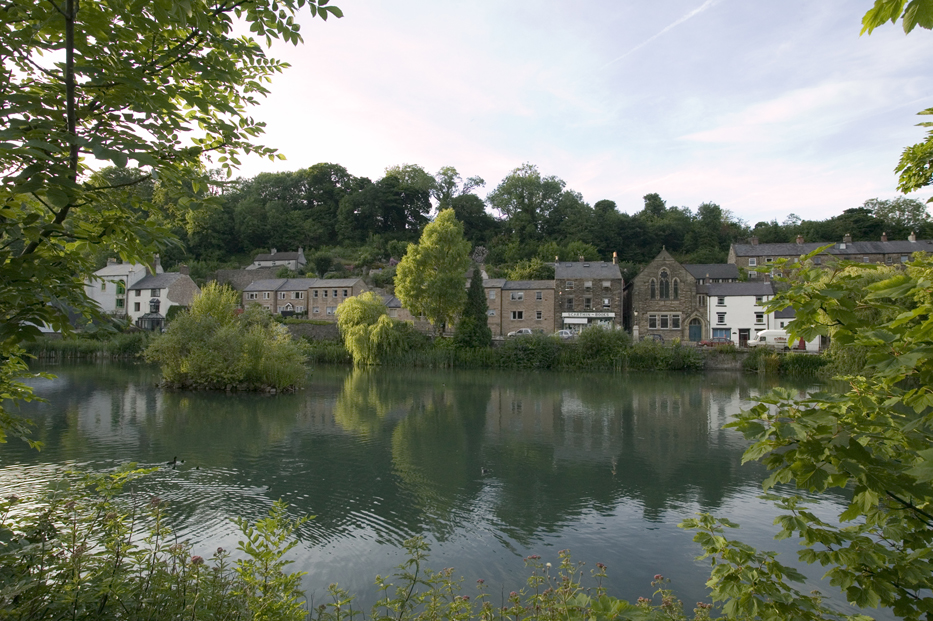
The primary importance and value of the Derwent Valley Mills relates to developments in technology in the 18th century that introduced the mechanically powered factory system within the textile industry.
Find out More
UK World Heritage Sites
List and link to UK World Heritage Sites.
Find out More